Tariffs for food and parcel deliveries received by online couriers have fallen sharply in recent years — and the government is now preparing rules to address it.
The Ministry of Communication and Digital Affairs (Kemkomdigi) is drafting a Ministerial Regulation on guidelines for app-based goods and food delivery service fees. The step follows a hearing with the Indonesian Online Transport Drivers Front (FDTOI) at the Kemkomdigi office in Central Jakarta on Friday (20/11/2026), received directly by Minister of Communication and Digital Affairs Meutya Hafid.
From Rp9,200 to Rp3,600
Drivers’ main complaint is tariffs that keep falling. FDTOI representative Ade Putra gave an example: one platform previously set a tariff of Rp9,200 for deliveries under four kilometres. Now, drivers find tariffs of only around Rp3,600 to Rp4,600 per order.
“For passengers, one order can be Rp10,200. Meanwhile courier friends average only Rp3,000,” Ade said.
In his view, the tariff decline is driven by competition between aggregators racing to offer cheap prices to consumers. Yet a courier’s job differs from a passenger driver’s: couriers handle varied types and sizes of goods, deliver several parcels to different locations in one trip, and bear the risk of large and heavy goods.
Instant and multistop services add to that burden. In multistop service, consumers pay a delivery fee from each point — but the extra time and effort for drivers is not matched by the earnings received. One platform already gives an additional around Rp5,000 for each extra stop, but according to drivers that is still not enough to offset the low base tariff.
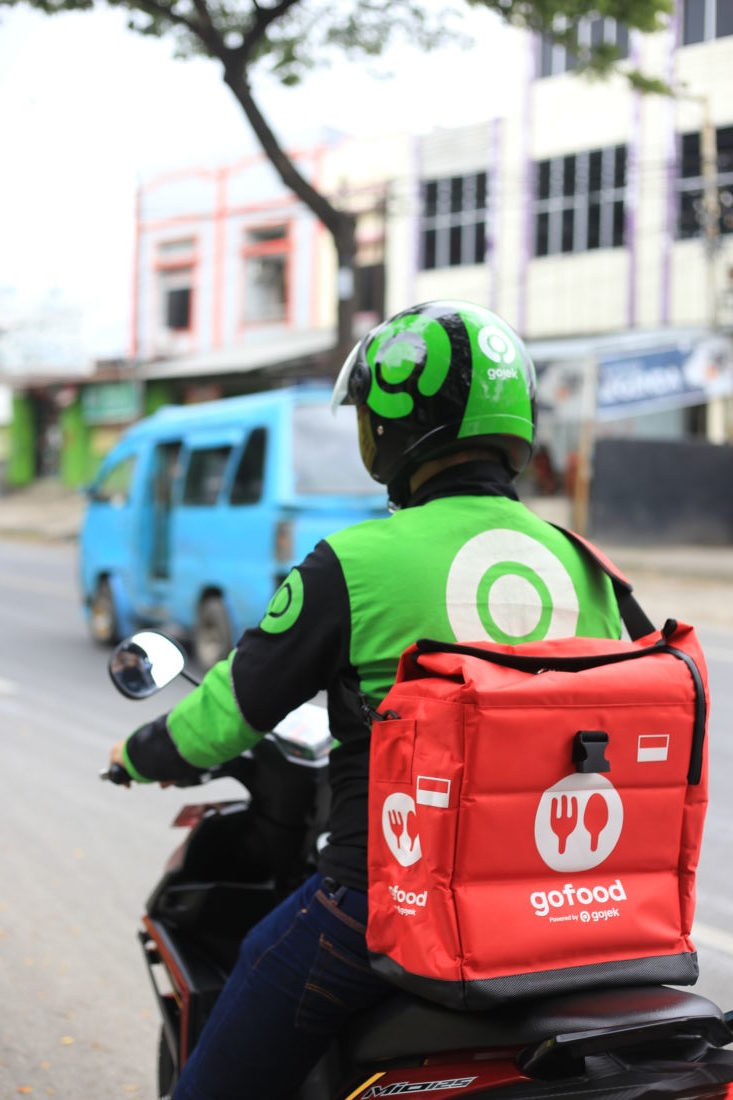 An online food delivery driver. Driver representatives asked the government to set lower and upper tariff limits specifically for goods and food delivery services. Photo: GadgetDiva.
A demand fought for since 2016
FDTOI representative Mahmud said regulating delivery tariffs is a demand drivers have fought for since the service grew in 2016. The earnings received so far are considered not commensurate with operating costs: fuel, vehicle maintenance, internet quota, and labour.
Drivers also highlighted another issue: platform policies towards drivers who refuse certain goods — refusal can lead to sanctions up to account suspension — as well as late disbursement of earnings. One driver representative revealed that one platform only disburses earnings around one week and four hours after the work is done, hampering daily operational needs such as buying fuel and food.
Drivers therefore asked the government to set lower and upper tariff limits specifically for goods and food delivery services, calculated with the courier job’s characteristics in mind — not equating them with passenger tariffs. They also proposed additional fees for multistop or combined orders, and compensation for waiting for orders at restaurants and pickup locations.
The legal basis: Presidential Regulation 27/2026
Kemkomdigi Director General for Digital Ecosystems Edwin Hidayat Abdullah explained that drafting these rules is part of implementing Presidential Regulation Number 27 of 2026 on the Protection of the Digital Platform-Based Transport Ecosystem. Through that regulation, Kemkomdigi has the mandate to draft rules for app-based delivery services, including goods and food delivery.
“If we are too cheap, the app business and MSMEs will not survive, but if too expensive, then no MSMEs will buy either,” Edwin said.
He stressed the government would consider all input before setting policy, and open dialogue with drivers, app companies, and relevant ministries — including the Ministry of Transportation, because the tariff formula must be aligned across ministries. The government will also account for handling costs, parcel weight and dimensions, risk, waiting time, and parking.
Minister Meutya Hafid added that goods and food delivery services have different characteristics from passenger transport, so they need their own rules. In her view, there has so far been no uniform regulatory reference for this service — in Indonesia or in other countries.
“Because this is a new form of technology, there is no single reference regulation from other countries; in fact many countries do not have one yet. Indonesia is trying to create a new regulation,” Meutya said.
She promised to involve drivers from various regions in drafting the rules, because each region’s geography and characteristics affect operating costs and challenges on the ground.
A balance of three parties
The core of the rules being prepared is balance: drivers receive decent compensation, app companies can run their businesses sustainably, while MSMEs and consumers can still use delivery services at affordable costs.
“We do not want to adopt a policy that ends up burdening couriers, aggregators, or MSMEs. How to set a fair share is work that must be based on understanding and dialogue between regulators, drivers, aggregators, and also later with the Minister of MSMEs,” Edwin explained.
There is no firm schedule yet for when this Ministerial Regulation will be issued. What is clear is that, for millions of online couriers and MSMEs whose businesses depend on delivery services, these rules will determine whether delivering parcels and food can become a decent livelihood — or remain work with tariffs that keep being squeezed.
Read also: Komdigi urges Google to explain the shutdown of 19,372 YouTube channels.