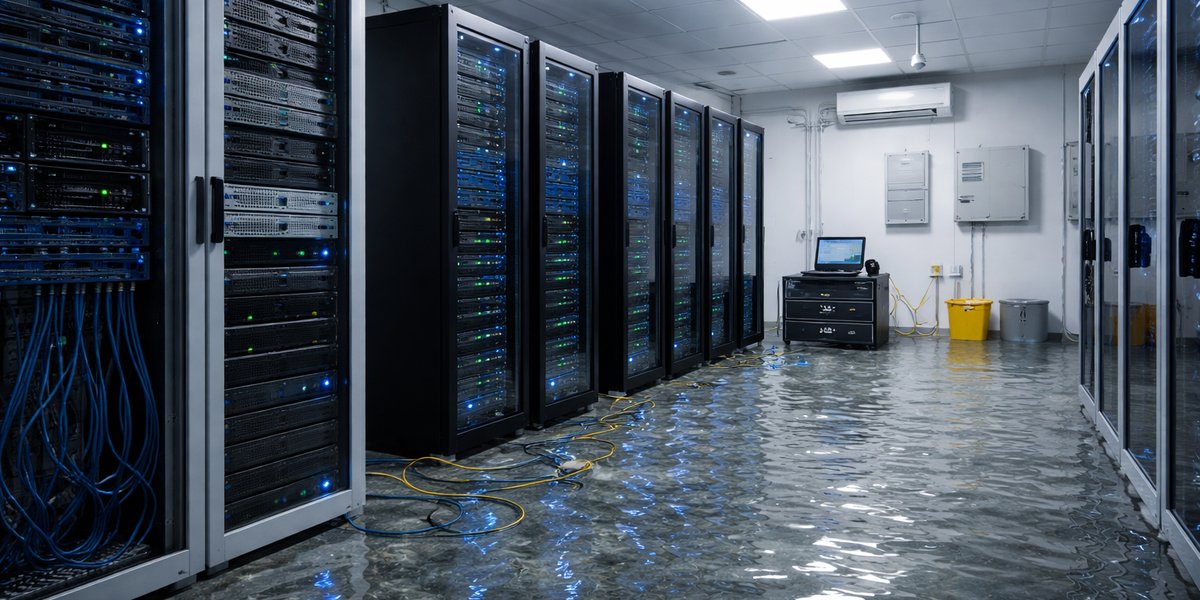
Within one week, the internet that was supposed to “never go down” went down again and again. Office email, flights, banking services, and even the United States’ spy agency network — all failed within 12–20 November 2026. And what makes this sequence remarkable is not just its scale, but its cause: not hackers.
Here is the timeline, based on reporting from TechRepublic, the Cloud Security Alliance, The Register, and Wikipedia’s summary of the events.
Thursday, 12 November: Microsoft 365
It all started with Microsoft. Microsoft 365 services — Outlook, Teams, Exchange, and Copilot — went down for almost 24 hours and only recovered on 14 November, affecting millions of users worldwide. According to Microsoft, the cause was a latent software defect in its networking gateway servers, compounded by network traffic changes and reduced server capacity. Microsoft stressed the incident was not a cyberattack.
Friday, 13 November: the FAA and Workday
The next day, the FAA halted all flights across the United States for more than 4 hours — a nationwide ground stop. The cause: telecommunications network instability, as excessive data traffic overwhelmed legacy air traffic control equipment. Investigators pointed to possible contributing issues at facilities in Texas and Arkansas; the precise root cause is still under investigation.
On the same day, Workday — the HR service used by thousands of companies — was disrupted across two data centres (13–14 November). Reports link the disruption to a troubled disaster-recovery test.
Sunday, 15 November: AWS
On 15 November, AWS reported connectivity and sign-in problems in its us-east-1 region in Northern Virginia, lasting about 3 hours and 16 minutes (03:05–06:21 AM Pacific Time). Eleven services were affected, including IAM Identity Center sign-in and a subset of Network Load Balancers in one network cell. AWS has not published a root cause — and its incident updates make no mention of a cyberattack. (Note: this AWS disruption does not appear in Wikipedia’s timeline table; it is confirmed by TechRepublic’s timeline and The Register’s report citing the AWS Health Dashboard.)
Monday, 16 November: banks and an airline
Monday brought finance and aviation. JPMorgan Chase suffered a software bug in an on-premises hardware system that slowed transaction processing — logins failed, transfers were delayed. The bank stressed the problem was not cyber-related, and transactions were back to normal by Monday evening. The impact spread: customers of Bank of America, Wells Fargo, U.S. Bank, Truist, and Capital One reported problems, and some Zelle payments were delayed — although the Zelle network operator said its platform remained operational.
On the same day, United Airlines delayed flights because of a software issue affecting crew apps, flight planning, and weather systems.
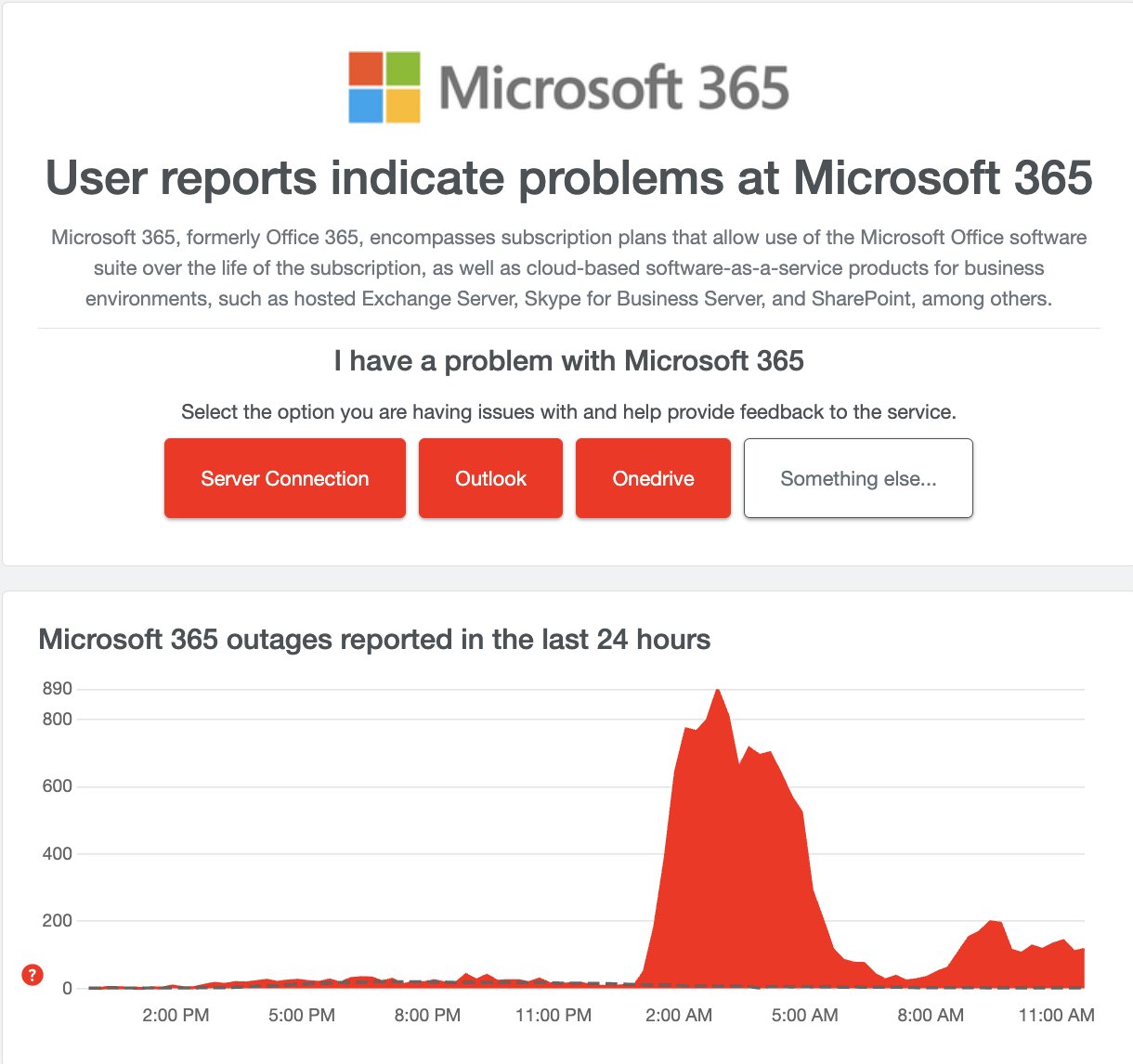 Illustration: a spike in Microsoft 365 outage reports on Downdetector from an earlier incident — not November 2026 data.
Tuesday, 17 November: Apple and the NSA
On 17 November, Apple users reported problems accessing iCloud, Apple Pay, the App Store, Apple Music, and AppleCare. Apple attributed the cause to an internal update, not a cyberattack.
On the same day, the NSA’s highly classified internal communications network — NSANet — also went down, only recovering on 20 November. According to reports, the cause was the handling of software updates for PHP vulnerabilities, which crashed the agency’s internal messaging system.
Not a cyberattack — and officials have confirmed it
On 18 November, US Secretary of State Marco Rubio said there was no indication the incidents were related. At a Congressional hearing the same day, US national security officials said there was no evidence of a coordinated cyberattack. The Director of National Intelligence described the incidents as separate events associated with maintenance and technical changes.
The pattern that emerges is different: at least some of the incidents began with something humans deliberately did — upgrades, a new router installation, a backup test, maintenance. Reuters reported that some of those upgrades were intended to fix AI-related vulnerabilities, and rolling them out at scale without adequate testing could itself cause disruptions.
Do not mix them up: Optimizely was a real cyberattack
That same week there was a genuine cyberattack — and it is important not to mix it with the sequence above. On 17 November, an attack on the Optimizely platform compromised the websites of 178 organisations, including Zoom, HSBC, and CNN. That was a cyberattack. The outage wave above was not.
The most relevant lesson for Indonesia: the services we use every day — Microsoft 365, AWS, iCloud, Apple Pay — all depend on a handful of companies and a handful of technical decisions. When one gateway is defective or one backup test goes wrong, the effects can be felt worldwide. That dependence, not hackers, is what made this week feel like the internet was collapsing.
Read also: Autonomous AI cyberattack breaches 178 sites, including Zoom and HSBC.