The status of the Riemann Hypothesis proof has moved up a level. A day after our article calling it a “claim, under verification”, the Lean & Mathlib community issued a joint statement on 21 November 2026: the proof submitted by Anthropic mathematician Levent Alpöge, together with Claude, is correct.
The statement reads: “We have full confidence that Alpöge’s proof of the Riemann Hypothesis is correct” — and even more firmly: “We hereby certify that both the statement and the proof of the Riemann Hypothesis are correct.”
In other words: this proof is now formally verified. But there is an important qualification that must not be dropped: institutional recognition — from the Clay Mathematics Institute, which offers the US$1 million prize — is still awaited. The accurate status today is: formally verified, not yet institutionally final.
What was verified, and how
Alpöge’s proof is not an ordinary mathematics manuscript. It is a Lean library — Lean being a formal proof programming language — containing around 17 million lines of code. Every logical step in the proof is written in a form a machine can check, not just read by a human.
The verification ran in three layers:
First, independent recompilation. Dozens of mathematicians and programmers recompiled the Lean library independently — on different machines and in different environments — without encountering problems.
Second, the comparator run is complete. Two independent tools — comparator and con-leche –compare — confirmed that the theorem proven by the code is exactly the same as the statement of the Riemann Hypothesis as written in Mathlib, the world’s largest formal mathematics library. This matters: what was checked was not only “does the code run”, but “is what was proven actually the Riemann Hypothesis itself, rather than a similar-looking statement”.
Third, kernel checking. The proof was exported and checked by the official Lean kernel, plus several other independent checkers. The kernel is the component that verifies every step of a proof from scratch — it trusts nothing except the rules of logic themselves.
The result: the Lean community (Lean Focused Research Organization) and the Mathlib Initiative were confident enough to issue a joint certification. A day earlier, several independent mathematicians told Scientific American they were “almost certain” the proof was correct. Now that confidence has become an official community statement.
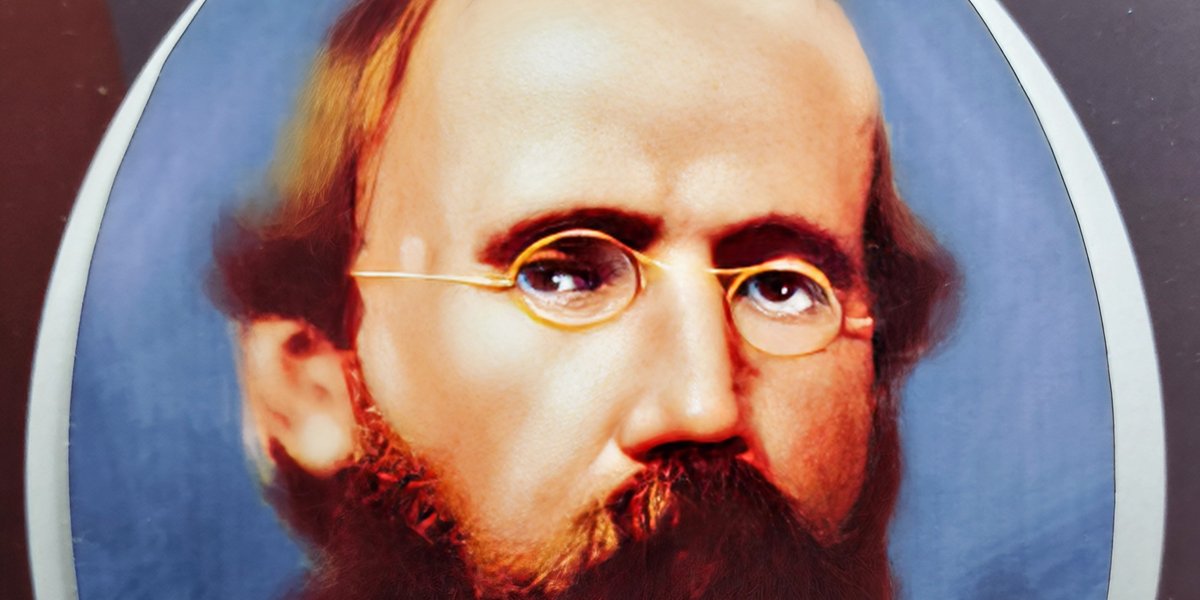
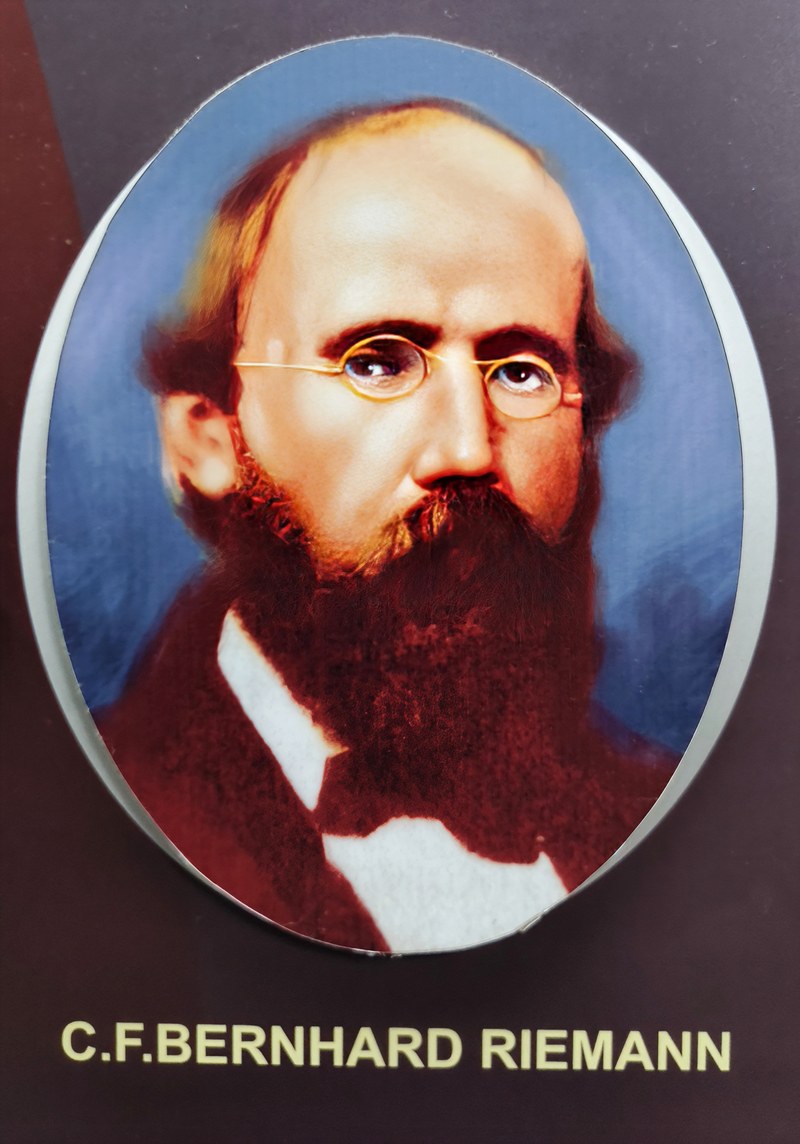 Bernhard Riemann formulated this hypothesis in 1859. For 167 years, no one managed to prove or disprove it. Photo: Wikimedia Commons.
What is not finished — and why it matters
There are three things that make the word “SOLVED” without qualification still premature.
The Clay Mathematics Institute has not changed its status. The body that included the Riemann Hypothesis in its Millennium Prize Problems still lists it as unsolved. The US$1 million prize process has not begun. Clay has its own assessment procedure, involving an expert committee and a waiting period — and that procedure does not automatically follow a Lean community certification.
Mathematicians still need to understand the idea. Formal verification ensures every logical step is correct. It does not automatically explain why the proof works — the mathematical idea behind it still needs to be studied and understood by the community. A mathematician who does not understand the proof cannot yet develop, simplify, or build on it. That stage could take months to years.
This certification covers only the original Riemann Hypothesis. Alpöge also submitted a claim related to the Generalized Riemann Hypothesis (GRH) — the broader extension. That GRH claim is still going through the same process and has not been explicitly certified. Do not write that GRH has also been certified.
So, has the Riemann Hypothesis been proven?
The accurate answer: its formal proof has been certified correct by the Lean/Mathlib community, after thorough machine checking. That is a historic milestone — the first time the world’s hardest mathematics problem has been “proven” with AI assistance and verified by machine.
But “proven” in the full sense — recognised by the prize-awarding institution, understood by the mathematics community, and accepted as a theorem — still requires further steps. Until the Clay Institute changes its status, the correct framing is: formally verified by the Lean/Mathlib community; institutional recognition still awaited.
That is not downplaying this achievement. Quite the opposite: this is the first time in history that a mathematics proof has been examined with machine precision down to the last line — and passed.